

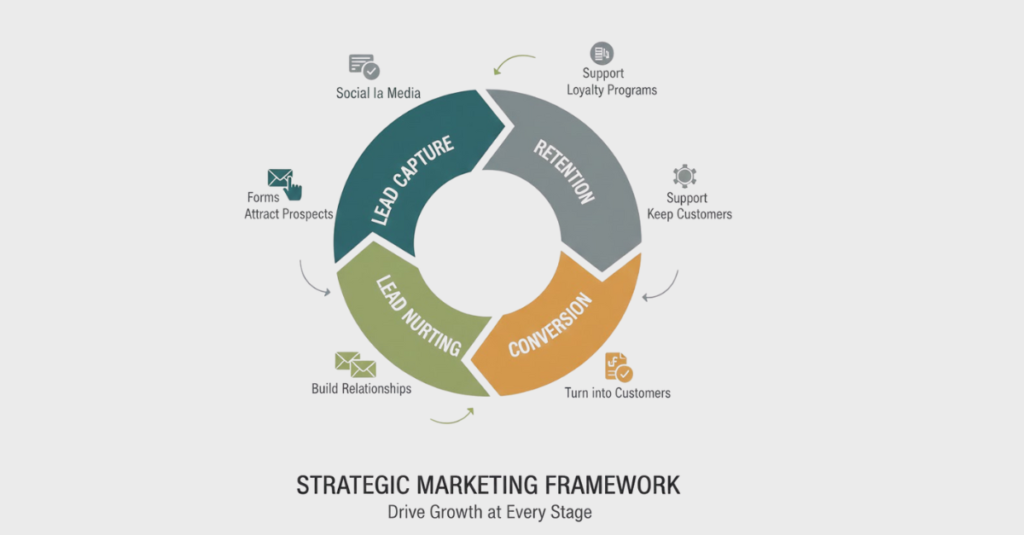
In today’s competitive marketing environment, capturing a lead is just the beginning. Effective growth comes from nurturing prospects through the sales funnel and retaining customers long after purchase and marketing automation is the system that makes it scalable.
A robust marketing automation framework empowers teams to deliver personalized experiences at scale, trigger timely follow-ups, segment audiences intelligently, and retain customers without burning extra manpower or budget. Here’s a comprehensive expert examination of how to build a strategic automation framework for real lead nurturing and long-term retention.
Why Marketing Automation Is Central to Lead Nurturing & Retention
Marketing automation amplifies your ability to communicate with prospects and customers in a timely, relevant, and personalized way, without having your team manually send every message.
Companies using automation for lead nurturing often see dramatic results:
- Better qualification and nurturing can increase qualified leads by over 400%.
- Automated follow-ups ensure no lead gets missed and builds trust through consistency.
- Personalized sequences nurture prospects far more effectively than generic campaigns.
Automation allows marketers to focus on strategy while the system executes segmented, behavior-driven outreach turning casual interest into commitment and retained customers into long-term advocates.
Core Components of a Marketing Automation Framework
A successful framework isn’t just a series of automated emails — it’s a cohesive system that intersects data, content, behavior, scoring, and retention tactics.
Here’s how each piece fits.
1. Lead Scoring & Qualification – Separating Hot from Cold
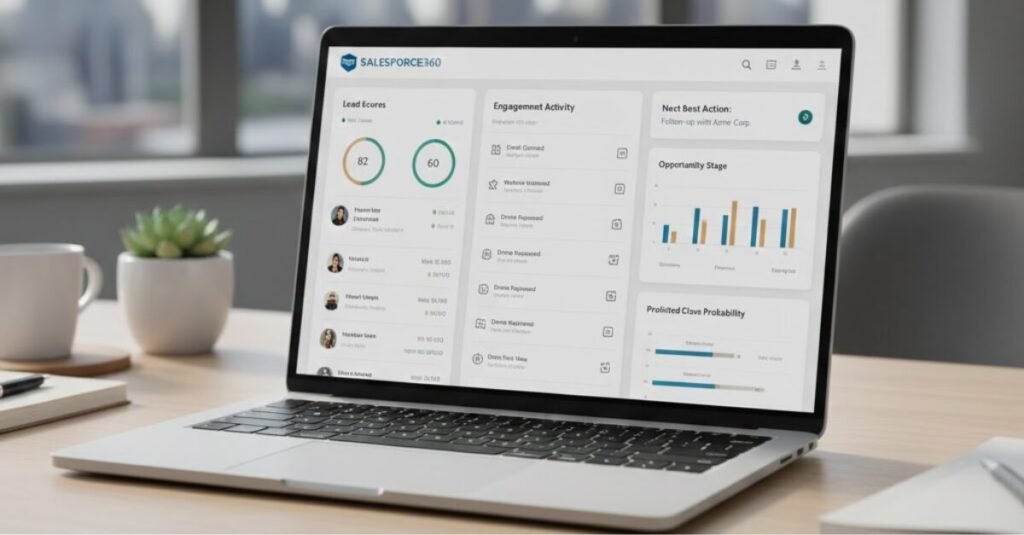
Lead scoring assigns numeric values to actions prospects take (e.g., clicked a link, downloaded content, visited pricing) so you know when a lead is ready for sales outreach. It’s the backbone of any strategic nurturing plan.
- Set thresholds for Marketing Qualified Leads (MQLs)
- Align scoring criteria with sales to avoid premature handoffs
- Revisit scoring rules quarterly to optimize performance
Lead scoring ensures your follow-ups are timely, relevant, and rooted in real intent not assumptions.
Image Prompt (Section Context)
A marketing automation dashboard showing lead scores, engagement activity, and nurture workflows. Modern SaaS UI, clean layout, professional automation tool aesthetic, landscape.
2. Segmentation & Personalization – Delivering the Right Message
Not all leads are created equal. Segment your audience based on:
- Behavior (page visits, downloads, click patterns)
- Demographics (role, industry, company size)
- Intent signals (pricing page visits, demo requests)
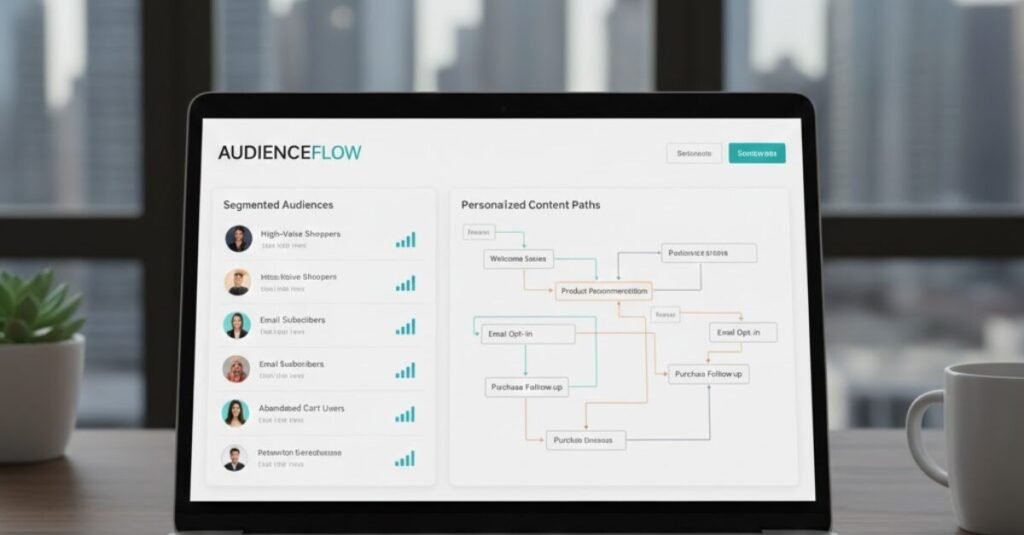
Segmentation allows you to tailor content and timing so messages feel personal and relevant. Personalized nurture content consistently outperforms generic blasts in engagement and conversion.
Automation tools let you set dynamic content blocks, personalized subject lines, and tailored journeys that adapt in real time as leads interact with your brand.
3. Multi-Channel Workflows – Engaging Where Prospects Live
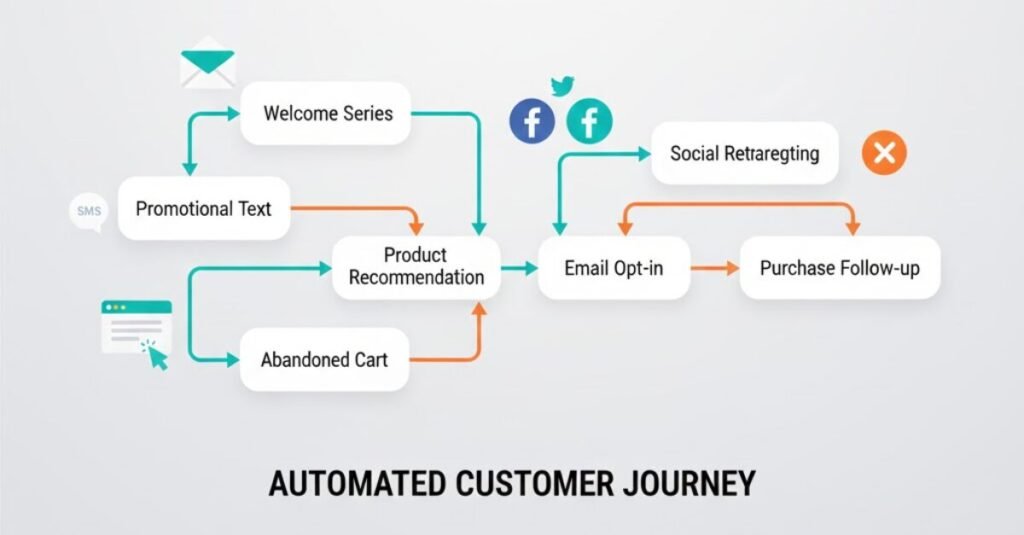
A modern automation framework uses multiple channels for nurture flows:
- Email sequence
- Retargeting ads
- SMS & mobile push
- Chatbots and web pop-ups
- Social engagement touchpoints
Marketing automation platforms like HubSpot, Marketo, and ActiveCampaign ensure messages engage leads exactly where they are.
Behavior-triggered drip campaigns (e.g., after an ebook download or webinar registration) significantly increase engagement and conversion outcomes compared to one-off emails
4. Content Mapping – Aligning Messages to the Buyer Journey
An effective nurture framework isn’t random – it’s strategic. Map content to funnel stages:
- Awareness: Problem education, FAQs, industry trend reports
- Consideration: Case studies, comparison guides
- Decision: Demos, product breakdowns, ROI proof
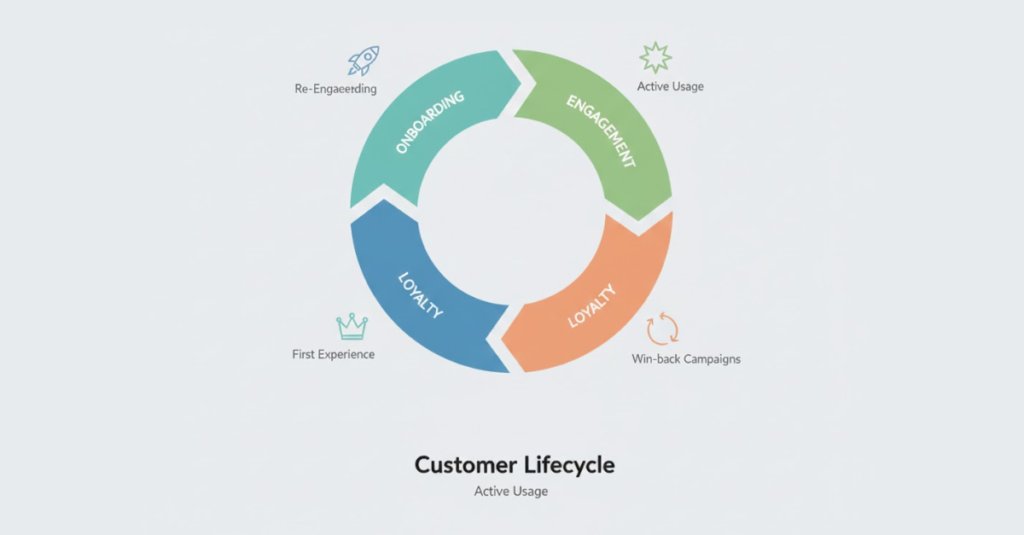
- Retention: Onboarding guides, loyalty content
- Re-Engagement: Personalized offers, product updates
Automated workflows distribute the right content at each juncture based on lead behavior and they keep prospects moving forward without manual intervention.
5. Automating Behavioral Triggers – Timing Is Everything
The most advanced nurture systems react to behavior, not schedules.
Examples:
- A lead opens your pricing page → sends a case study email
- A prospect watches a webinar → triggers a demo invite
- A current customer becomes inactive → launches a re-engagement offer
These behavior-based triggers make your automation feel human and timely and can increase conversions dramatically.
6. Sales & Marketing Alignment – Better Together
For automation to fuel nurture and retention, silent handoffs between teams won’t work.
Both functions should:
- Agree on lead scoring criteria
- Share dashboards and KPIs
- Use automation as a single source of truth
- Co-design workflows that reflect both marketing and sales goals
When teams align, nurture sequences and sales outreach become seamless, pushing leads closer to conversion without friction.
7. Retention Automation – Nurture Beyond Conversion
Nurturing doesn’t stop at the sale – it continues into retention and loyalty.
Marketing automation platforms can automate:
- Onboarding email series – educate new customers post-purchase
- Loyalty and rewards reminders – increase lifetime value
- Re-engagement campaigns – revive dormant users
- Upsell/cross-sell offers – present the next logical step
Automated retention workflows keep customers engaged and reduce churn by delivering ongoing value without manual task loads.
8. Continuous Testing & Optimization
Your automation system should never be “set and forget.”
Best practices include:
- A/B testing email subject lines, CTAs, and timing
- Analyzing performance data weekly
- Iterating based on behavior and conversion trends
Testing optimization can lift conversion rates significantly as you refine what works and what doesn’t in your nurture flows.
Putting It All Together – A Sample Framework
Here’s a simplified automation framework workflow:
- Lead Capture – form fills or ad clicks trigger initial welcome email
- Lead Scoring – assign points as lead engages
- Behavioral Triggers – send mid-funnel content based on actions
- Sales Alert – notify sales when lead hits a threshold
- Customer Onboarding – automated tutorial emails post-purchase
- Retention Nurture – loyalty campaigns and re-engagement
- Optimization Loop – measure, test, refine
This unified system retains prospects and builds long-term customer loyalty , the twin engines of sustainable revenue growth.
Conclusion – Automation Isn’t Just Tools, It’s Strategy
Marketing automation frameworks for lead nurturing and retention aren’t simply an assortment of scripts they are strategic, data-driven systems that:
- deliver relevance at scale
- engage prospects on their terms
- guide leads through the buyer journey
- turn buyers into loyal customers
Investing in thoughtful automation design not just software separates average campaigns from high-performance nurture and retention engines. The result is predictable pipeline movement, deeper engagement, and higher lifetime value.