
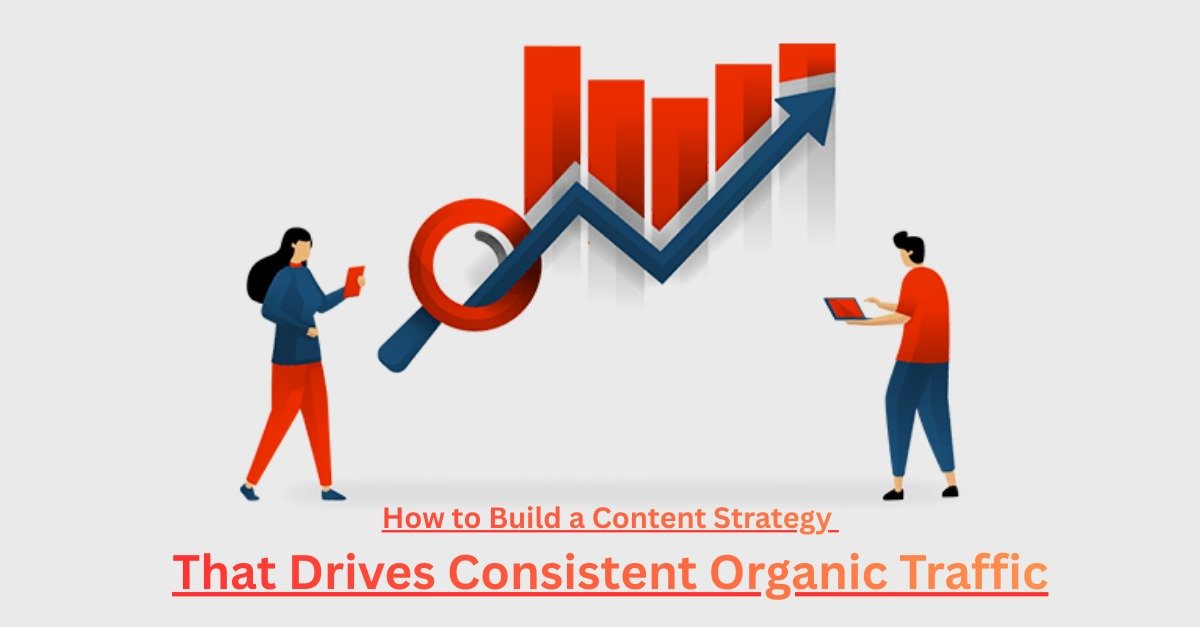

Organic traffic remains one of the most sustainable and cost-effective ways to grow a brand online. Paid channels can boost visibility temporarily, but a well-designed content strategy builds long-term authority, drives repeat visitors, and fuels business growth across SEO, social media, and conversion performance.
In this article, we break down how to build a content strategy that consistently drives organic traffic, backed by insights from marketing research, SEO best practices, and expert reviews.

Why a Strategic Approach Beats Random Content
Too many brands publish content reactively “just posting blogs” without clear goals or measurement. According to recent studies, only a small percentage of content pages drive significant organic traffic because most lack alignment with user intent, search demand, and business goals.
A strategic content plan ensures your efforts reinforce each other, provide real value, and attract the right audience over time.
1. Clarify Your Goals Before Publishing Anything
Before writing a single headline, ask:
- What outcomes do we want? (Awareness? Leads? Signups?)
- Who is our target audience?
- What problem are we solving?
Experts emphasize that without clear goals, you can’t measure whether content worked.
Set high-level KPIs such as:
- Organic sessions
- New users from search
- Keyword ranking improvements
- Time on page
- Lead conversions
Then align content decisions with these KPIs.
Image Prompt (Section Context)
A professional content strategy dashboard showing goals, KPIs, and organic traffic metrics. Modern SaaS UI, clean layout, editorial business photography style, landscape orientation.
2. Research Search Intent – Your Strategy’s Foundation
Organic traffic mostly comes from search engines. Understanding why users search for specific terms is core to effective content strategy.

There are four main types of search intent:
- Informational: learning about a topic
- Navigational: seeking a particular brand/site
- Transactional: intent to buy or convert
- Commercial investigation: comparing or evaluating
Tools like Google Search Console, Ahrefs, SEMrush, and Moz help you uncover intent and prioritize topics that match what your audience actually wants.
Ask yourself:
- Why would someone search this term?
- What result is Google ranking top?
- Does user intent match our content goal?
Content that aligns with search intent is far more likely to rank and attract consistent traffic.
3. Build a Keyword Strategy That Scales
Keyword research is not about stuffing words it’s about identifying topics with demand that your audience cares about.
Start with:
- Core topic clusters (e.g., “content marketing strategy”)
- Long-tail variations (e.g., “how to build content strategy for SEO”)
- Related questions (“what is content strategy,” “best practices for organic traffic”)

Use tools to analyze:
- Search volume
- Keyword difficulty
- SERP features (like featured snippets, “People also ask”)
This helps you gauge opportunity and plan what content you should create.
Map Content to the Buyer Journey
A content strategy that drives organic traffic must support every stage of the customer journey:
| Stage | Content Type | Objective |
|---|---|---|
| Awareness | Blog posts, infographics, video | Attract visitors |
| Consideration | Guides, comparison posts, case studies | Educate prospects |
| Decision | Product pages, demos, testimonials | Convert users |
| Retention & Advocacy | Help centers, email newsletters | Retain users |
This “journey alignment” increases organic reach and conversion potential.

Image Prompt (Buyer Journey Section)
A buyer journey visualization with stages awareness, consideration, conversion, and retention, connected by arrows and icons. Clean corporate style with muted colors, landscape orientation.
5. Create High-Quality, Deep Content – Not Shallow Pages
Google’s ranking systems reward content that demonstrates:
- Expertise
- Authoritativeness
- Trustworthiness
This means:
- Original insights
- Data-backed claims
- In-depth coverage of topics
- References and citations

Thin content or shallow posts rarely rank because they don’t satisfy user intent or deliver value. Experts recommend content of 1,500+ words for competitive topics but quality always beats quantity.
6. Optimize On-Page SEO – The Foundation of Organic Visibility
Even well-researched content needs solid on-page SEO:
- Title tags with target keywords
- Meta descriptions that entice clicks
- Header tags (H1, H2, H3) that structure content
- Optimized images with alt text
- Internal links to relevant pages
- Fast page load times
SEO tools like Surfer SEO or Frase analyze competitor pages and give real-time recommendations for optimizing content.
7. Build a Content Calendar – Slow Growth is Steady Growth
Consistency is critical:
- Set a publishing cadence
- Commit to quality and relevance
- Track where each topic fits in your strategy
A content calendar lets you avoid gaps, plan cross-channel distribution (e.g., SEO + email + social), and evaluate performance over time.

Image Prompt (Content Calendar Section)
A visual editorial content calendar showing scheduled blog topics, publishing dates, SEO priorities, and owner assignments. Professional business dashboard UI, landscape orientation.
8. Promote and Distribute Strategically
Organic traffic comes from search and content promotion:
- Share on social media
- Syndicate to newsletters
- Collaborate with influencers
- Repurpose content into videos, threads, PDFs
Cross-channel distribution boosts visibility and creates more backlinks a major ranking factor in search algorithms.
9. Measure, Analyze & Iterate
Your strategy must be data-driven. Key metrics to monitor:
- Organic sessions
- CTR from search results
- Bounce rate & time on page
- Backlinks
- Conversion goals (lead form fills, signups)
Use Google Analytics, Search Console, and SEO platforms to compare performance and refine topics that are underperforming.
Expert Tips for Long-Term Success
Update old content: Freshness signals matter in SEO optimizing and republishing older posts can boost rankings again.
Create topic clusters: Group related content around a pillar page to build authority and improve internal linking.
Write for humans, not robots: Satisfy search intent first; SEO second.
Focus on user experience: Fast pages, clear formatting, and helpful visuals improve engagement metrics.
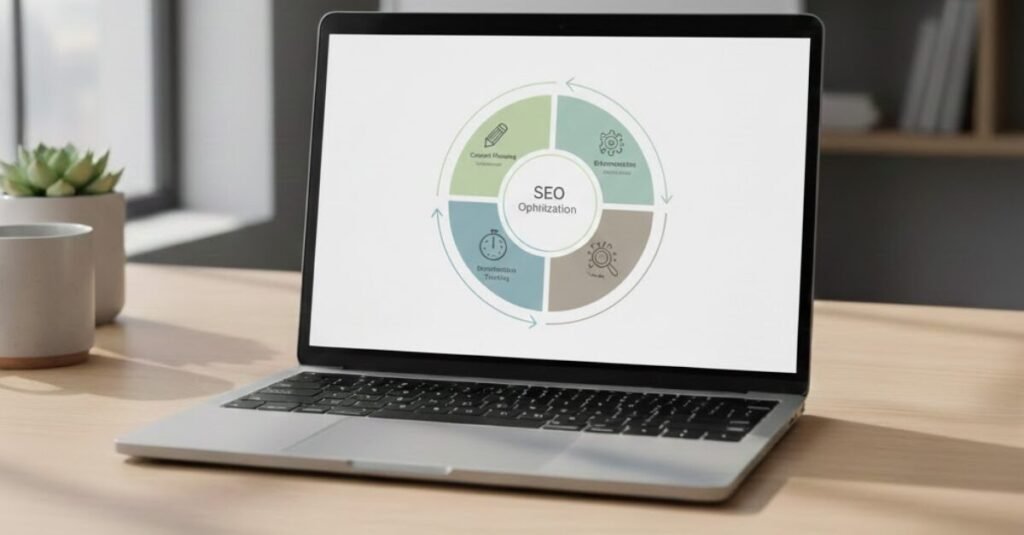
Conclusion – Content Strategy Is a System, Not a One-Off
Organic traffic doesn’t happen by accident. It comes from:
- Clear goals
- Audience understanding
- Intent-driven research
- High-quality content
- SEO optimization
- Strategic promotion
- Ongoing measurement
By building a content strategy rooted in research and user value, you create a self-reinforcing engine that attracts, engages, and retains organic visitors over time.