

In 2026, the marketing process was completely transformed from using static tools all the way to an integrated AI system that was specifically built for hyper-personalization. HubSpot was the main player that brought together CRM and automation, thus doing away with data isolation. For organic visibility, Semrush was still the main player in SEO, but now it was necessary for ranking in searches done with AI through the new technique called Generative Engine Optimization (GEO). On the other hand, the creation of content was completely changed by the likes of the multimodal AI-powered tools such as Canva and Jasper, which made it possible for small teams to create a large amount of brand-consistent creative work.
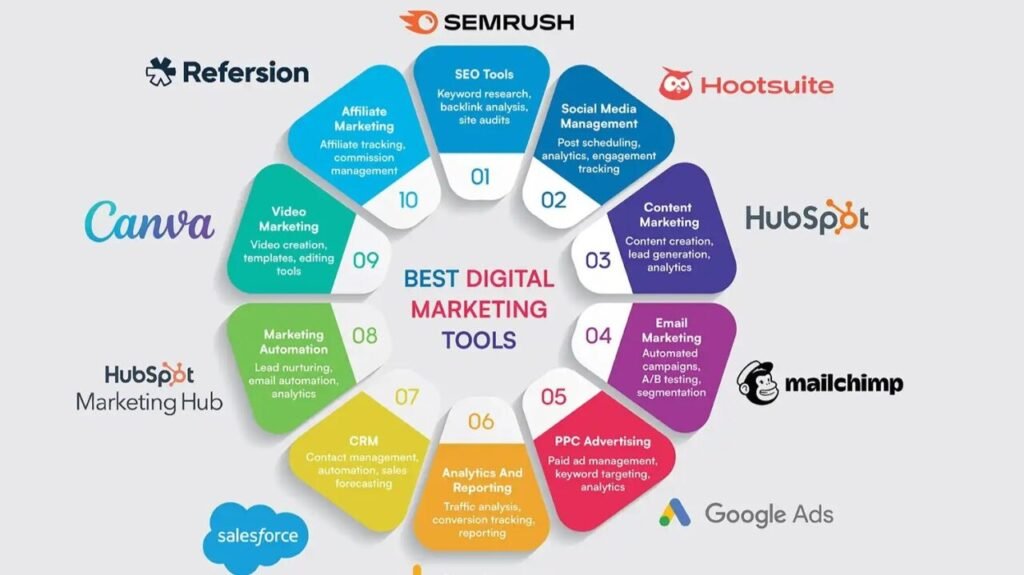
The latest technology has made it possible for intelligent automation to take over, as Klaviyo for instance is employing predictive analytics to set up customer outreach right at the moment when the customer is most likely to buy. In order to ensure that the investment returns are not compromised, GA4 is offering the required predictive insights that would allow for the instant reallocation of the marketing budget towards the channels that are performing well. In the end, the marketing toolbox of 2026 opens the door for a super smooth workflow where the AI will do all the tedious tasks and the team will be left only with the creative strategy part.
What Makes a “Best Marketing Tool” in 2025?
The perfect marketing tool for 2026 must work as a hassle-free growth driver. The ROI efficiency is the starting point, and among the things that the chosen platforms can do is to give time-savings that are immediate through the use of intelligent automation and predictive insights. The elimination of silos requires cross-platform integration to be a must; thus, your toolkit needs to be in perfect sync with your CRM and analytics to provide a “single source of truth” throughout the entire process. User experience is the main factor for success, and as a result, the teams will be able to work with the tool easily and its high adoption rate will not be accompanied by high learning curves. The tool will have scalability as a characteristic that will enable it to help both brisk-starting businesses and big and complex ones. In the end, the most advanced software will make the most of the revolutionary technology to change the raw data into a competitive edge and professionalized scale.
Best Marketing Tools for 2025
1.Strategy & Analytics
Strategy & Analytics
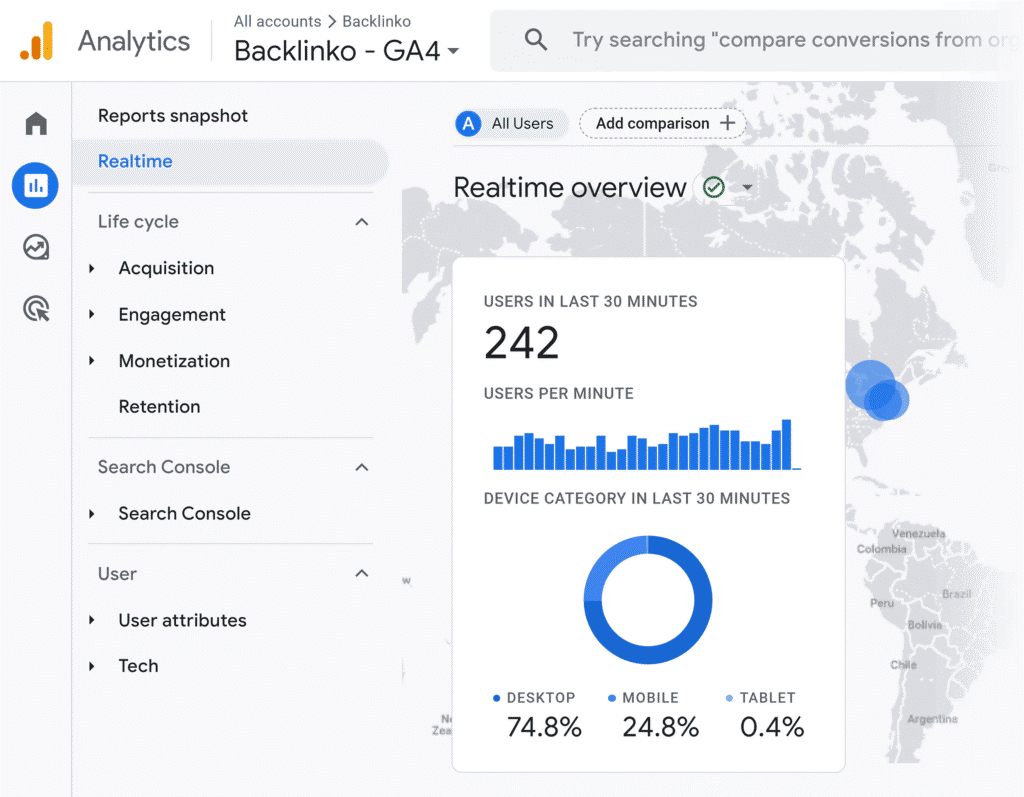
By the year 2026, GA4 comes to be recognized as the ultimate unification of measurement standard that captures both the web and app data in equal manner. It does this primarily through event-based tracking, which goes to the extent of recording every tiny interaction, thereby facilitating the observation of the entire journey of conversion as well as the intricate behavior of users across devices. With the elimination of traditional sessions, marketers can now take advantage of predictive metrics like churn likelihood and purchase intent for the purpose of budget allocation in real time. In the end, GA4 proves to be the irreplaceable instrument for transforming unprocessed data into profit-revealing insights that are easily actionable.
Hotjar and Microsoft Clarity
The best tools for understanding user behavior via high-quality visual data. By using the dynamic heatmaps and click tracking, these two platforms demonstrate precisely where the visitors are attracted or lose interest, thus making it possible to optimize conversions rather than relying on guesswork.
The biggest benefit comes from the session recordings that make it possible for you to see the real-time friction points. This information is necessary for interpreting user intent and resolving the bottlenecks that traditional analytics overlook. In the end, this information gives you the behavioral intelligence needed to increase the efficiency of UX.
Tableau & Looker
Tableau and Looker are the best ones among the visual analytics, turning inconsistent data to a single “source of truth.” By visualizing connected data, they combine several streams such as CRM and ad spending into top-quality reports from different sources. These platforms become indispensable in the upper management’s decision-making process since they can make complex data sets into easy-to-understand and live dashboards. Additionally, they can predict and therefore provide the necessary insights to detect trends and improve the overall performance of the business at a larger scale, thus being the connection between basic data and practical business intelligence.
2. CRM & Customer Lifecycle
HubSpot
HubSpot is the ultimate all-in-one tool for those teams that are looking for perfect sales and marketing alignment. The system wiring contact life cycle it guarantees that every lead is going to be nurtured within a single unified database from first click to final close. One of the most remarkable features is smart segmentation, which opens up the possibility of hyper-personalized campaigns based on real-time user behavior.
HubSpot is a perfect match for small and medium-sized businesses as well as mid-market companies since it offers a flexible infrastructure that expands with your revenue. It removes the data silos and gives us a “single source of truth” that is instrumental for team efficiency and faster conversion. In the end, it is the benchmark for transforming scattered interactions into professional revenue pipelines.
Salesforce
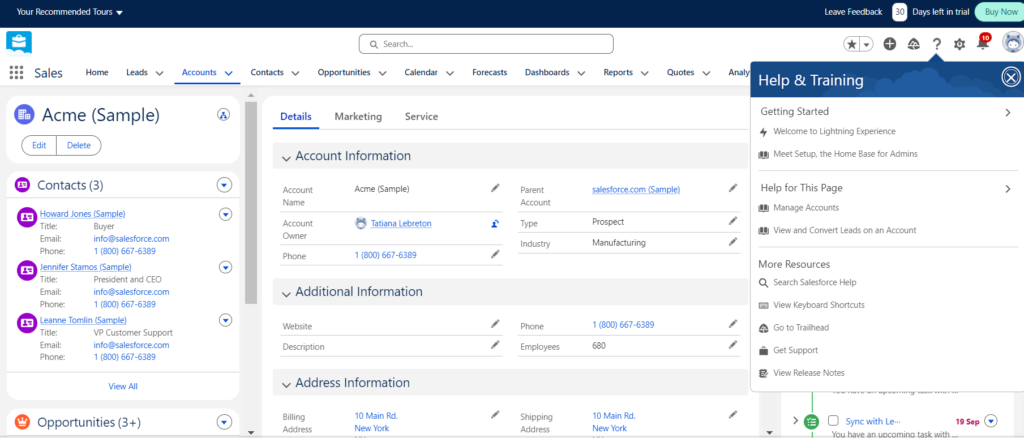
The Enterprise Powerhouse Salesforce has inflated the aspirations of enterprise-grade CRM to a whole new height, without even a close rival to its depths for the teams that need to deal with huge, and complex, data. Its core power source is Einstein AI through which conductors of predictive insights and lead scoring have been able to single out and work on the most profitable opportunities. Advanced workflows being the organization’s daily routine, they would easily automate global departments’ intricate business processes ensuring complete operational efficiency. Salesforce’s powerful multi-channel reporting acts as a magnifying glass on the customer’s journey and unravels the fragmented touchpoints thereby turning them into one cohesive strategy. Salesforce has become the go-to system for big teams needing to customize the infrastructure in such a way that it helps them not only to grow but also to keep their place ahead of the competition.
3.Email Marketing & Automation
ActiveCampaign
When it comes to workflow automation, ActiveCampaign has no equal as it unifies CRM logic with advanced behavioral triggers. It uses lead scoring to differentiate between high-intent prospects and the rest, moving them automatically through the email flows that are conditional on their actions.
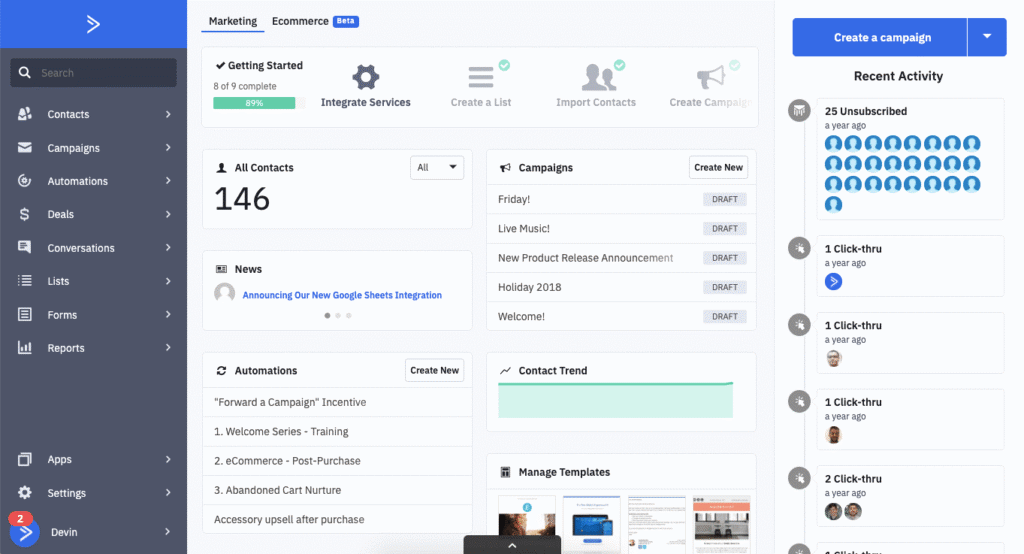
When it comes to workflow automation, ActiveCampaign has no equal as it unifies CRM logic with advanced behavioral triggers. It uses lead scoring to differentiate between high-intent prospects and the rest, moving them automatically through the email flows that are conditional on their actions.
Klaviyo
Klaviyo has taken the top position in eCommerce automation for the whole industry. It has been specifically designed to transform customer data into direct sales, that’s why the company’s name is associated with turning customer data into direct sales. Thanks to predictive analytics, it sees in advance the behaviors of high-value customers like churn risk and next-purchase timing, making it easy and efficient to target with very specific segmented messaging. The company’s main competitive advantage comes from the cross-channel flows that connect email and SMS in a perfect way, thus achieving maximum customer attention.
This creates a direct link between your messages and revenue. It is the vital tool for the brands that want to take advantage of customer lifetime value (CLV) through the use of very relevant, data-driven, and consequently effective outreach.
4.Content & SEO Tools
Semrush
The Ultimate Tool for SEO and Competitor Analysis Semrush is the one and only SEO powerhouse having no competitor when it comes to organic growth and competitive benchmarking tools. Its topic-gap analysis can identify opportunities with high value which your competitors are not utilizing and, at the same time, real-time rank tracking allows you to monitor your market share with utmost accuracy. Furthermore, it has integrated content optimization tools, which will ensure that every page is designed to rank in the age of AI search.
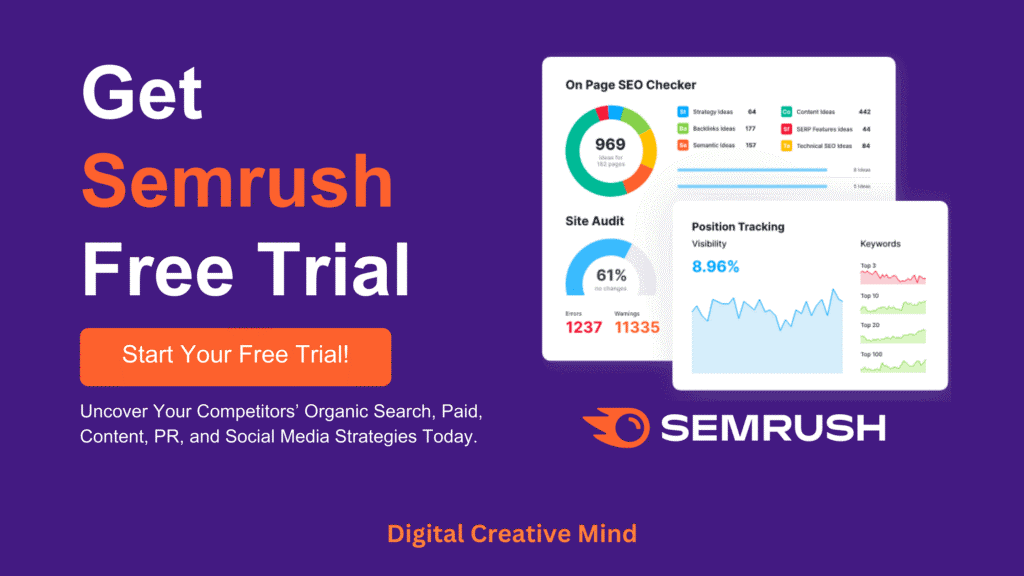
They said platform is an absolute must for turning search data into a winning market strategy. Ultimately, it delivers the necessary competitive intelligence to surpass your competitors and assure your visibility in the long run.
5.Social Media & Creative
Canva
Canva is the supreme creative accelerator, allowing non-designers to create assets ready for publication in no time. It guarantees that each content piece is visually coherent and professional by using a huge library of social templates and centralized branding kits. Its collaboration in real-time cuts down the approval process, which makes it the ideal tool for small teams that need high-volume output.
It successfully removes the bottleneck that exists between an idea and a finished product. In the end, Canva is the vital powerhouse for keeping a lively brand presence without the expense of a full-time agency.
Buffer & Hootsuite
Buffer and Hootsuite are the top-tier tools for managing social media, created to enhance team productivity to the full. These tools, by allowing posting on multiple platforms from one dashboard, get rid of the problems caused by manual updates and at the same time, making it certain that a brand voice is always consistent. Their powerful engagement reporting converts social metrics into actionable insights, thereby assisting the teams to pinpoint the exact content that can really bring about ROI.
These tools are not only helpful but also necessary for keeping up a high-frequency presence without falling into the trap of burnout. In the end, they give the operational efficiency that is required to upscale the social strategy and community growth along with it.
Marketing Tool Trends
The privacy-first architecture will be the defining feature of the 2026 landscape, with zero-party data at the core of consumer trust. Unified Customer Data Platforms (CDPs), connecting and consolidating fragmented data, are now integral to the process of super-personalized automation. Predictive insights are being utilized and tools are moving from reactive reporting to proactive audience scoring.
The emphasis has been on cross-platform attribution with the track of every dollar through integrated measurement being ensured. This change in marketing strategy is going to make the marketing activity intelligent orchestration instead of simply a mass outreach. Ultimately, the combination of data-driven operational efficiency and high-level strategic empathy will be the winning factor in 2026.
Conclusion
The year 2026 is all about tools that can communicate with each other. When you select the platforms that emphasize thorough integration and smart automation, you no longer have to struggle with your software and instead, you get to witness the outcome that is measurable. The intention is to have a stack that is well-balanced and performs the heavy-duty tasks—ranging from analytics to outreach—while at the same time creating a team-friendly ecosystem that is non-burdensome. This transition takes away the manually made and time-consuming guesswork and replaces it with data-based campaigns that are made for quick growth to scale in large volumes. By removing the operational silos, you can finally concentrate on the big-picture strategy while your tools take care of the revenue velocity. It’s about being smart in your work and not about being hard in your work when it comes to your brand’s growth.