

In the year 2026, intent data will be regarded as the primary factor for growth in the B2B pipeline, and it will completely change the way marketing and sales work together by revealing the active buyers rather than providing the static leads. The consumer behavior indicated by real-time buying signals can be monitored through the “Dark Funnel,” thus allowing the teams to communicate with the potential customers much earlier in the process than submitting a form. This insight accelerates conversion rates and guarantees that the revenue is predictable because the proper communication is done at the peak of the research cycle. In the end, using intent tools will turn marketing into a data-driven powerhouse that drives up the scale and quality of acquisition.
What Is Intent Data — and Why It Matters
Intent data acts like a very accurate behavioral compass, which listens to the digital footprints through search engines, third-party websites, and social networks to detect potential buyers’ interest. By tracking these live signals, B2B teams go far from making assumptions to being able to rank leads according to their chances of converting and send messages that are very personalized. This type of intelligence gives sales teams the power to reduce the time it takes to convert a sale and increase the rate of conversion tremendously. In the end, being able to read intent signals correctly turns your sales funnel into a predictable revenue stream, thus making it possible for you to reach out to the best prospects at the exact time of the highest demand.
Types of Intent Data
First-Party Intent Data
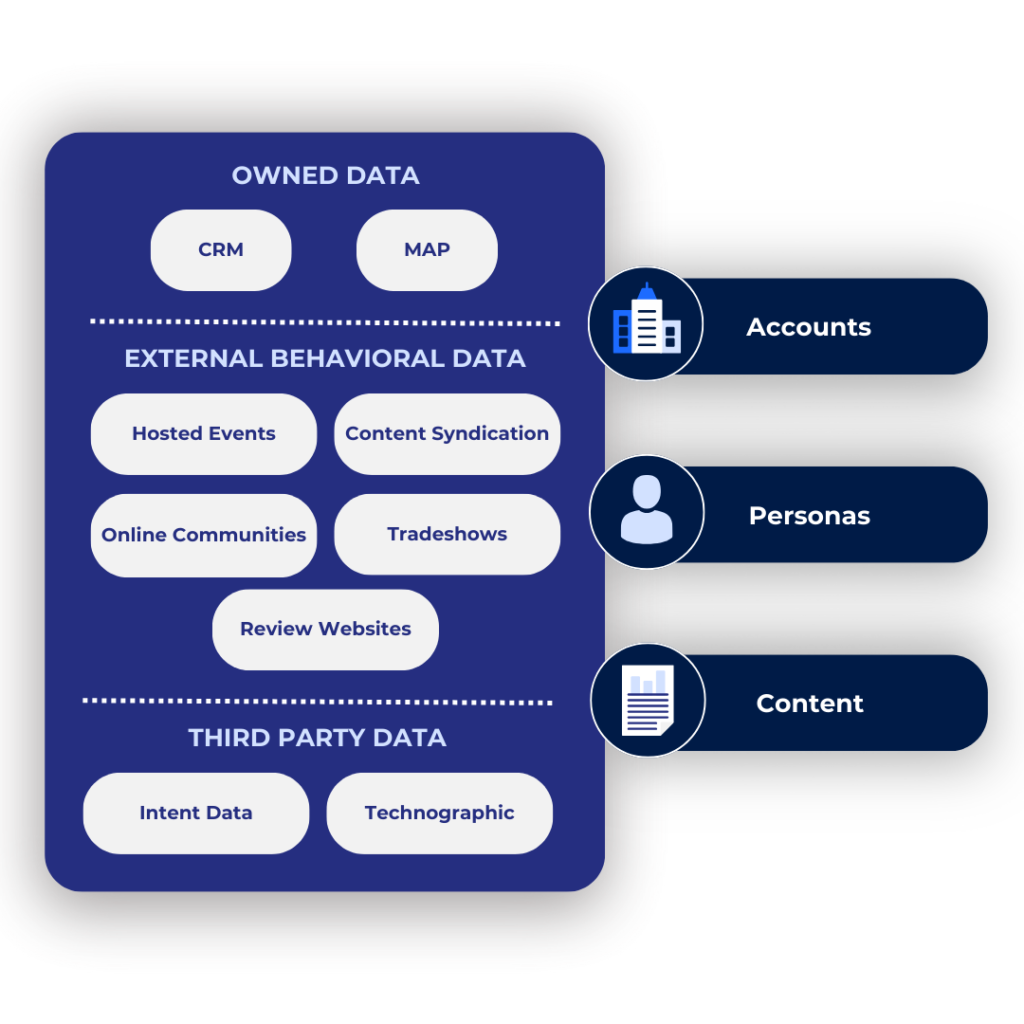
The most significant asset in your arsenal, first-party intent data, to be obtained straight from your owned digital properties using website tracking, content downloads, and email behavior, is the most valuable one. As this data is based on direct audience engagement and form interactions, it provides unmatched accuracy and relevance. By examining these internal signals, B2B teams can discover high-intent prospects, who are already part of their ecosystem, and thus, enable following up with hyper-personalized communication that results in immediate conversion and loyalty.
Second-Party Intent Data
The second-party intent data acts as a strategic connection between your own data and the open web, being sourced directly from reliable partners like review websites, SaaS marketplaces, and industry publications. This data, unlike anonymous signals, comes from such high-affinity environments as webinar partners or affiliate platforms, where your target audience is actively participating. The data provides a very high level of assurance and becomes a signal to know for sure which companies are doing research on topics related to your solution. So, with these wider signals, the B2B teams can not only find the prospects with verified relevance and high purchase intent, but also make their outreach to the audience that is already warm to your category more confident.
Third-Party Intent Data
In 2026, third-party intent data plays a crucial role as an early-warning system, pointing out potential clients situated within the “Dark Funnel” even before they come to your website. When B2B companies keep a watch on the external signals like keyword trends, competitor analysis on review sites such as G2, and content consumption across the whole publisher network, they will discover an enormous amount of previously unreached audience. This kind of data is not exclusive and it makes noise so it needs a bit of filtering to get rid of the noise, but its main advantage is the predictive scale. The sales team that could access the external insights could address the in-market buyers right at the peak of their research cycle and this gave them a critical first-mover advantage which helped them shorten sales cycles and drive proactive pipeline growth with the sales team catching up.
Best Intent Data Tools for Predictable B2B Pipeline Growth
6sense
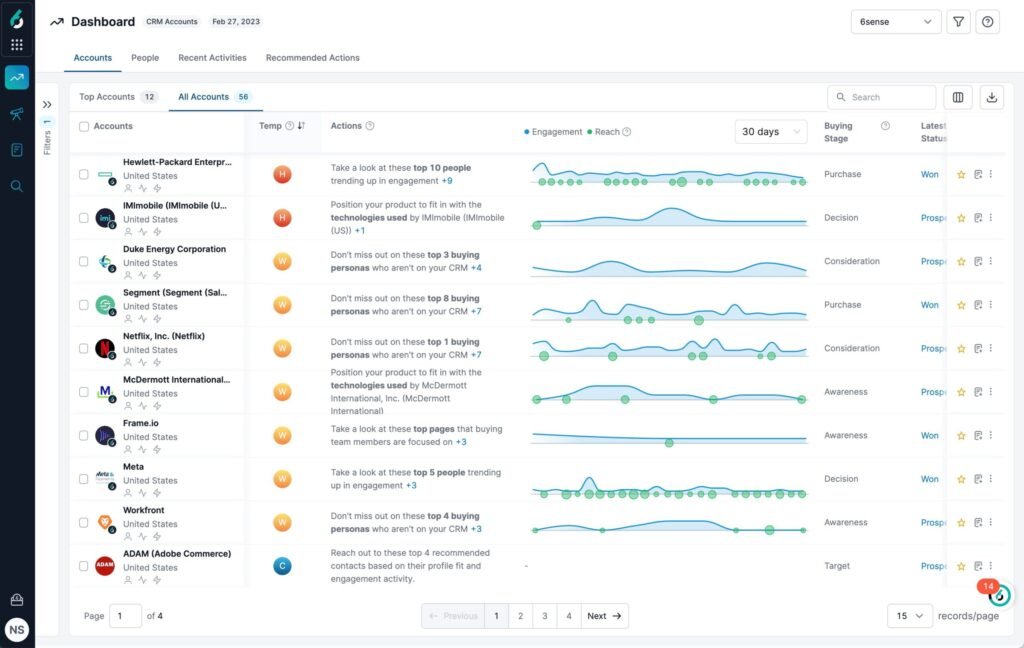
6sense is the top Revenue AI platform for big businesses, which is created to reveal the “Dark Funnel” by spotting anonymous buyers at the very beginning of the research phase. This is done through a combination of predictive analytics and a constantly changing account scoring mechanism, which is so accurate that it can actually tell when a customer is due for a purchase and teams can then act at the most opportune moment. Apart from that, the biggest plus point of the software lies in its ability to manage ABM effectively by taking into account trillions of real-time intent signals to pick the most valuable accounts and accelerate the flow of sales leads. To sum up, 6sense is the ultimate platform for Enterprise B2B teams that want predictive intelligence to be a step ahead of their rivals and to have a steady flow of revenue.
Bombora
Bombora is the go-to source for combined third-party signals as it generates this through its gigantic B2B data-sharing co-op that includes over 5,000 esteemed websites. The unique Company Surge® technology tracks when an account’s inquiry on particular subjects goes over the average, indicating a true purchasing process. Providing high-accuracy insights on the topic level, Bombora helps marketers to find the buy-intent customers much earlier before they come to a proprietary site. It is the only choice for B2B marketers who want very wide intent coverage and also need ethical, consent-based data to support a fast-paced ABM strategy.
G2 Buyer Intent
G2 is the top choice for software vendors and is able to capture verified research behavior from millions of active buyers. G2 makes high-fidelity signals available, based on direct interactions, such as viewing your pricing page, comparing you to a rival, or exploring your specific product category, whereas broad data tools offer only very rough signals. This unique insight is leveraged by sales teams to engage the prospects at the very peak of the decision-making cycle and use Competitive Intelligence to the max since it alerts when accounts research direct rivals. The integration of these active intent alerts with your CRM will allow you to trigger automated sequences for high-value actions like pricing visits while also utilizing churn prevention signals to identify current customers who are looking for other software. G2 is vital for SaaS makers who want to rule their niche and capture mid-to-bottom funnel demand with the utmost precision.
LinkedIn Sales Navigator & Intent Signals
LinkedIn Sales Navigator is the top social selling tool, using self-reported, real-time data from more than 1 billion professionals to point out active buying signals. By monitoring real-time job alerts, the team can trace the “Champions” to new companies where they can have cold-entry points right away, and at the same time, the buyer intent signals will show the accounts that have recently come in contact with your brand or have gone to your page. Relationship mapping enables you to develop strategies that are more account-based, and it also allows you to organize the buying committee visually and spot the prominent stakeholders. It has the hassle-free CRM data validation that guarantees your pipeline is always accurate because it automatically records the contact changes in Salesforce or HubSpot. It is unquestionably the indispensable tool for those in professional services and B2B sectors alike who are committed to trust-based engagement and high-value networking.
Demandbase
Demandbase has become the go-to solution for ABM-heavy companies and has integrated first-party as well as third-party intent signals into one account-based framework. The company’s main focus is on intent aggregation, which employs AI-generated predictive modeling to rank accounts according to how likely they are to buy. This, in turn, allows marketing teams to do precise campaign orchestration and to engage customers with hyper-personalized content through various channels. Demandbase’s advanced account segmentation and multi-channel data insights are the ways through which sales and marketing keep perfect alignment. At the end of the day, it is the indispensable platform for those teams that need a data-driven ecosystem to scale complex, high-value B2B relationships with a very accurate approach.
ZoomInfo Intent
ZoomInfo is singled out as the primary option for sales teams with great growth, because it offers a merging of large contact intelligence with real-time intent signals. It gives the salespeople the opportunity to see not only which companies are buying but also who they should speak to by combining the firmographic data with the trends in specific intent topics. The buying signals presented by the platform for companies offer a complete understanding of the needs of the prospect, while the hassle-free syncing of CRM and automation makes these insights readily available for immediate action. In the end, the ZoomInfo is the best solution for the teams that need improved data in order to use the aggressive outbound strategies and to maximize pipeline velocity through surgical, contact-level precision.
Strategies to Boost Pipeline with Intent Data
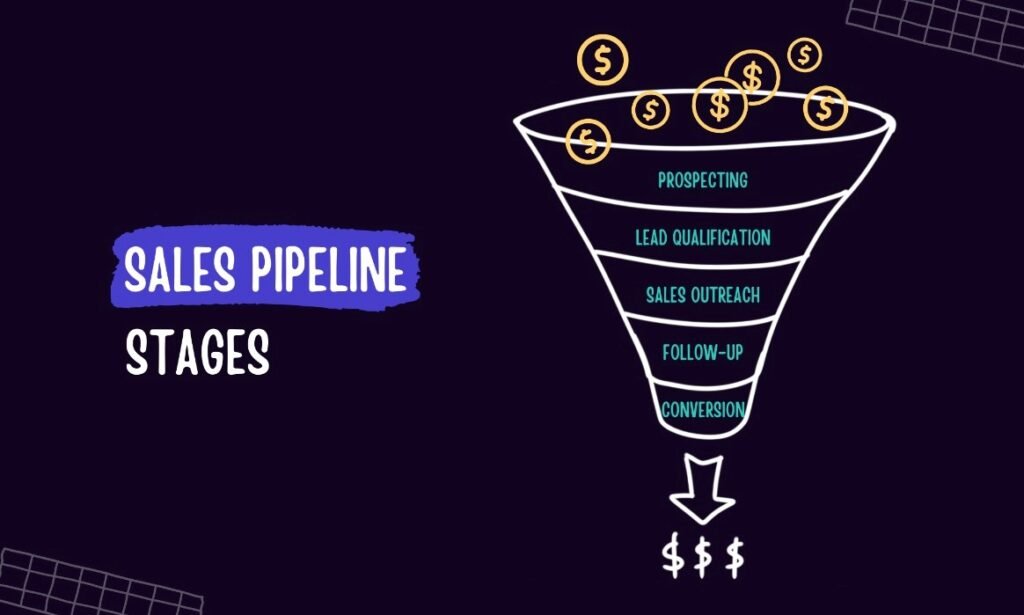
If you want to get the maximum ROI in 2026, the teams would be required to perform data collection as well as work with intent-based execution. AI scoring for leads in sales will guarantee the allocation of their efforts towards the customers who are most likely to purchase. These signals allow the activation of automated outreach workflows and the creation of intent-based segments in the CRM for hyper-targeted engagement when combined. Such knowledge can allow the sales team to adapt their communication style to the different intent topics, while marketing can still provide the most relevant content and ads to the research signals. This kind of synchronization not only raises the chance of conversion but also ensures that your brand remains the most relevant solution during the entire customer’s journey.
Conclusion
In 2026, intent data tools are not merely a choice; they are the key element for certain B2B pipeline expansion. Through the early detection of active buying signals, companies change the course from mere assumptions to a scientifically based method using data which, in turn, considerably cuts down the sales cycle length and increases the rate of conversion. When these high-quality machines are added to your process, it results in better campaign ROI and synchronization of sales and marketing goals. Be it the use of predictive AI or specific CRM integrations, understanding these signals guarantees that your group approaches the right prospects at the right moment, converting market intent into a long-lasting increase in revenue.