


Cold email is often misunderstood. Many teams treat it as a numbers game send more emails, hope for replies, and blame “email fatigue” when it fails. In reality, cold outreach still works exceptionally well when it’s executed as a system, not a spray-and-pray tactic.
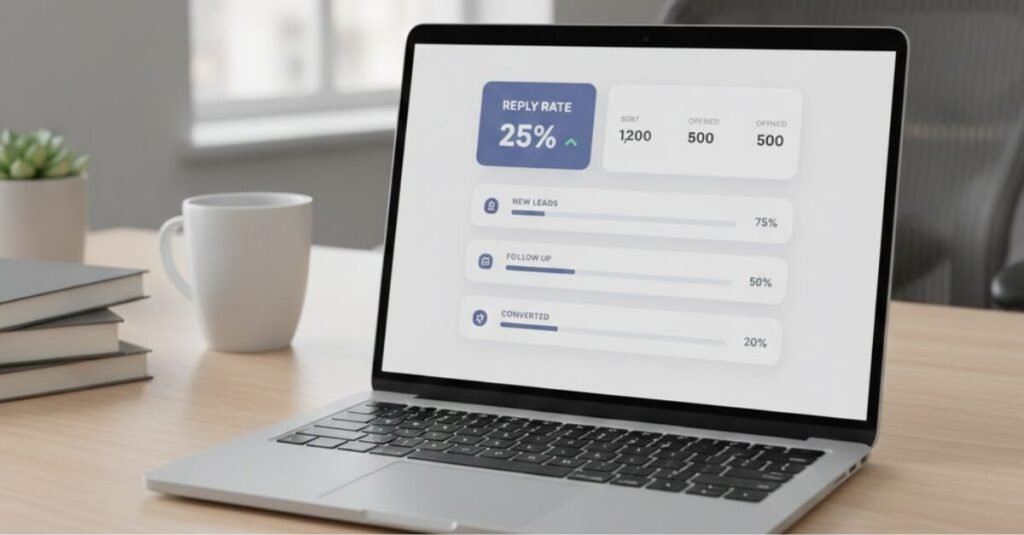
High-performing sales and growth teams don’t rely on templates alone. They follow a structured workflow that combines targeting, research, personalization, timing, and continuous optimization. This article breaks down a proven cold email outreach workflow that consistently generates replies based on industry best practices and expert execution standards.
Why Most Cold Email Campaigns Fail
Before discussing what works, it’s important to understand why most cold outreach doesn’t.
Common failure points include:
- Poor targeting (wrong audience, wrong timing)
- Generic messaging with no relevance
- Over-automation with fake personalization
- Weak subject lines that never get opened
- No follow-up strategy
- Ignoring deliverability fundamentals
Cold email fails not because people don’t read emails but because most emails give them no reason to reply.
Step 1: Define a Narrow, High-Intent Audience
Effective cold outreach starts before the first email is written.
Instead of targeting broad roles like “Marketing Managers” or “Founders,” expert teams narrow their ICP using multiple filters:
- Industry
- Company size
- Tech stack
- Business model
- Recent triggers (hiring, funding, expansion)
A well-defined audience allows you to write emails that feel relevant rather than intrusive.
Expert insight:
If you can’t clearly explain why you’re emailing someone in one sentence, you shouldn’t email them yet.
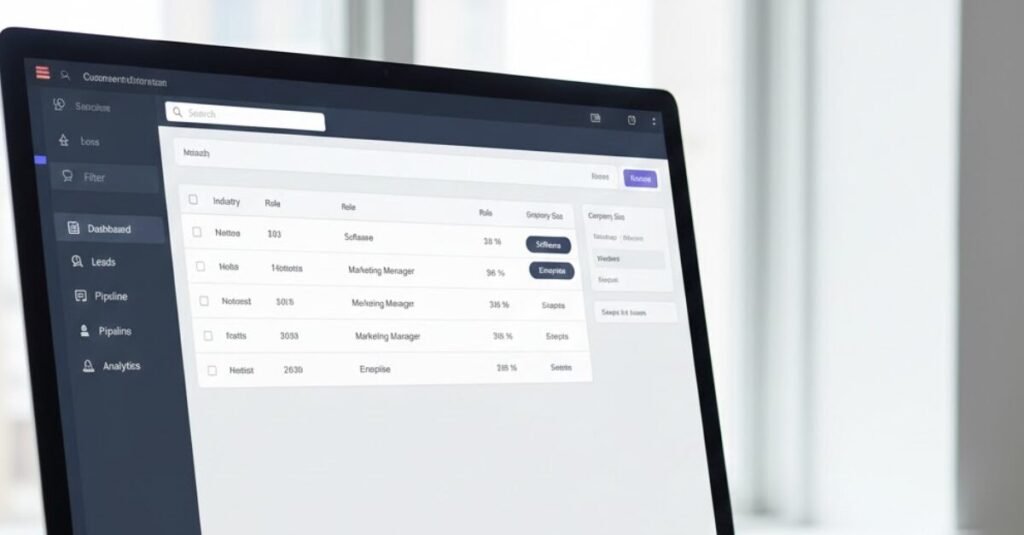
Step 2: Build a Clean, Verified Prospect List
List quality matters more than list size.
High-reply campaigns prioritize:
- Verified email addresses
- Real decision-makers
- Active companies
- Up-to-date data
Tools are useful here, but manual checks still matter. Even the best automation breaks down when data quality is poor.
Key principle:
A list of 200 well-researched prospects will outperform a list of 2,000 random contacts.
Step 3: Research for Context, Not Flattery
Personalization does not mean:
- “Loved your recent LinkedIn post”
- “Hope you’re doing well”
Real personalization is contextual relevance.
Before writing:
- Understand the prospect’s role
- Identify a likely challenge they face
- Connect that challenge to your solution
The goal is not to impress it’s to show understanding.

Step 4: Write Emails That Start Conversations (Not Pitches)
Cold emails that get replies don’t try to sell immediately. They aim to start a conversation.
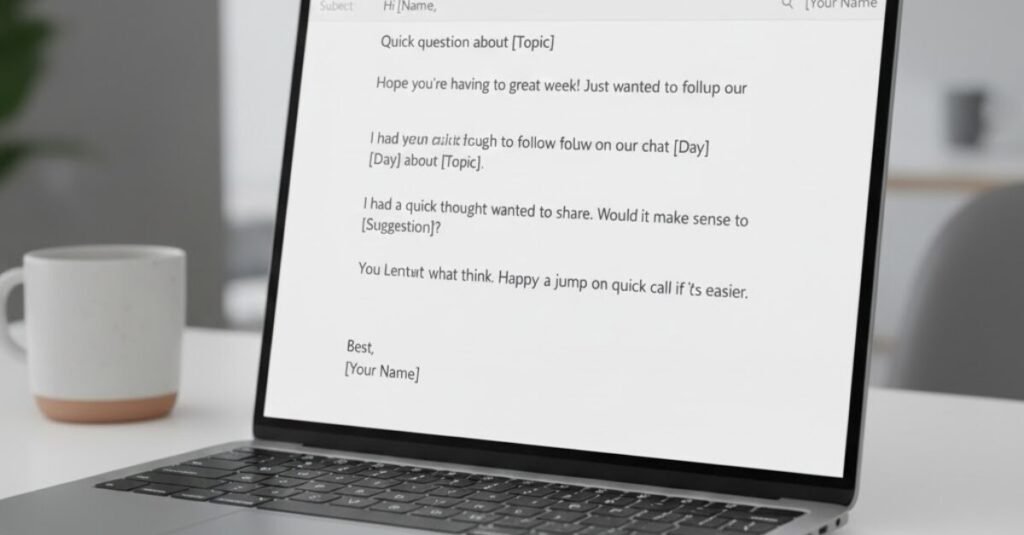
A high-performing cold email structure looks like this:
- Short, relevant opening
- Clear problem or observation
- Specific value angle
- Soft call-to-action
Avoid:
- Long introductions
- Feature lists
- Over-promising results
- Aggressive CTAs
Example CTA styles that work:
- “Is this something you’re exploring right now?”
- “Worth a short conversation?”
- “Open to a quick exchange of notes?”
Step 5: Keep Emails Short and Skimmable
Busy decision-makers don’t read—they scan.
Best practices:
- 4–6 short lines
- Plain text format
- No images or links in the first email
- Simple language
If your email looks like a newsletter, it will be ignored.
Step 6: Use a Smart Follow-Up Sequence
Most replies come from follow-ups, not the first email.
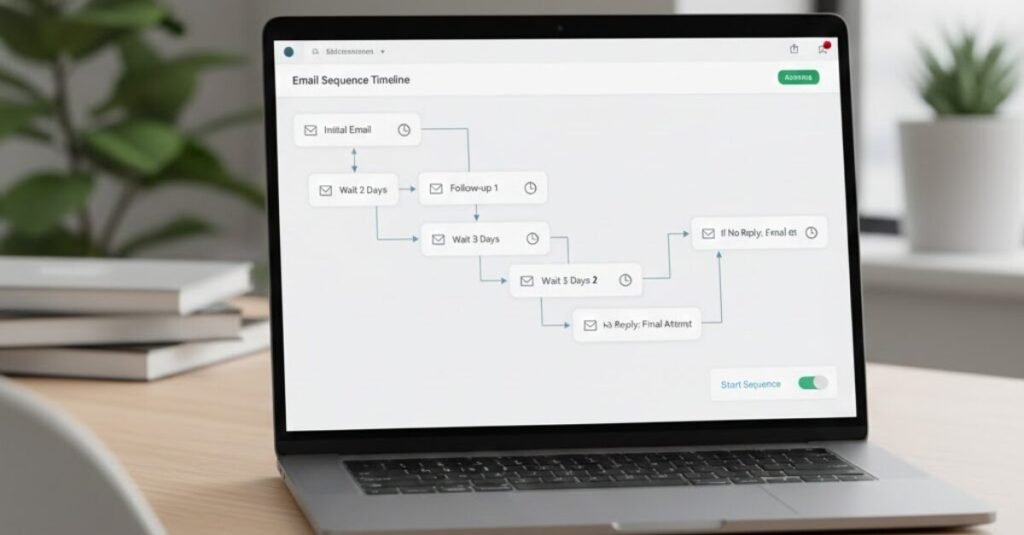
A proven follow-up workflow:
- Day 1: Initial email
- Day 3–4: Light nudge (context reminder)
- Day 7: Value-driven follow-up
- Day 10–12: Break-up or check-in email
Each follow-up should add new context, not repeat the same message.
Expert rule:
If you feel awkward sending a follow-up, your original message wasn’t clear enough.
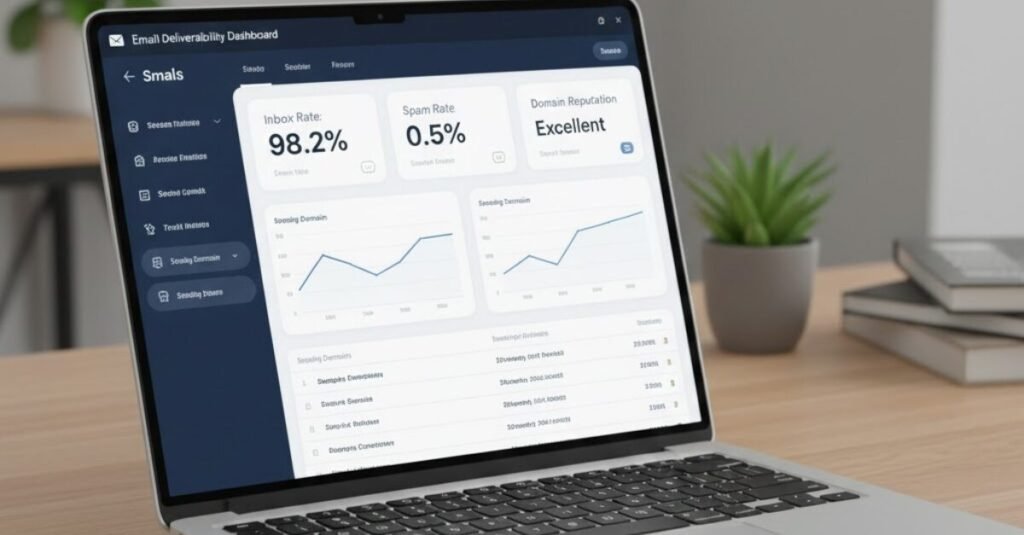
Step 7: Optimize for Deliverability First
Even the best copy fails if emails don’t reach the inbox.
Key deliverability practices:
- Warm up new domains
- Use separate sending domains
- Limit daily sending volume
- Avoid spam-trigger words
- Maintain consistent sending behavior
Cold email success starts with inbox placement, not copywriting.
Step 8: Track Replies, Not Just Opens
Open rates matter less than reply quality.
Track:
- Positive replies
- Neutral replies
- Objections
- No response patterns
Analyze which:
- Subject lines start conversations
- Value propositions resonate
- Audiences respond faster
Then refine your workflow based on real reply data, not vanity metrics.
Step 9: Iterate Weekly, Not Monthly
Cold outreach is a living system.
High-performing teams:
- Review campaigns weekly
- Test one variable at a time
- Refine messaging by audience segment
- Pause what doesn’t work quickly
Consistency beats perfection.
What This Workflow Gets Right
This cold email workflow works because it:
- Respects the recipient’s time
- Focuses on relevance over volume
- Treats outreach as conversation, not conversion
- Improves with data and iteration
Cold email isn’t dead. Bad cold email is.
Final Takeaway
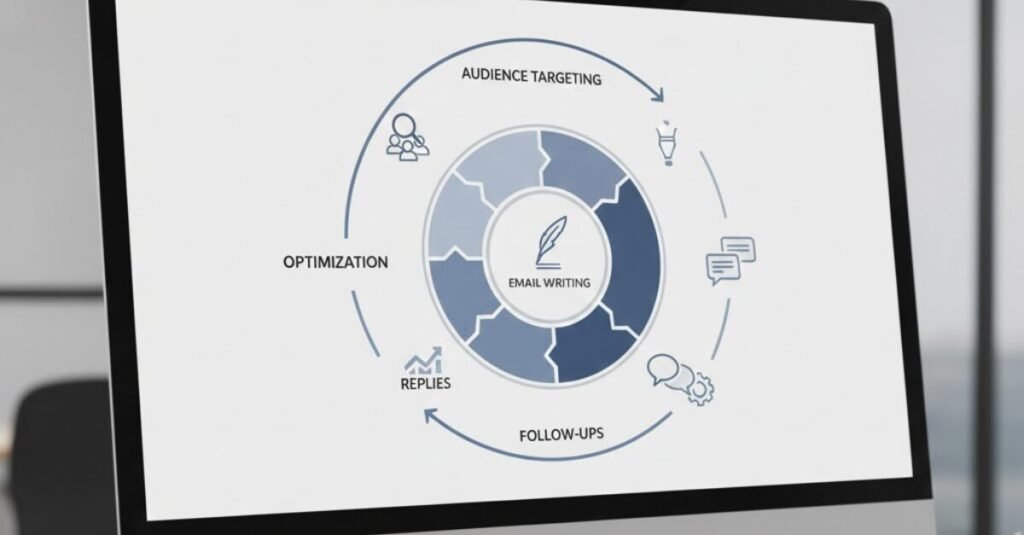
Cold outreach still delivers replies when it’s built on:
- Clear targeting
- Thoughtful messaging
- Strategic follow-ups
- Strong deliverability
- Continuous optimization
When treated as a system not a shortcut cold email becomes one of the most reliable outbound channels for starting real business conversations.