

Growing a SaaS business today isn’t about running more ads or publishing more blogs. It’s about building a system one that attracts the right audience, educates them, converts them into customers, and keeps them long enough to compound revenue.
This is where full-funnel marketing comes in.
After working with early-stage SaaS startups and scaling B2B products, one thing is clear: companies that understand the full funnel grow predictably, while those focused only on acquisition burn budget and stall.
This blueprint breaks down the entire SaaS marketing funnel, stage by stage, with practical insights and expert-level guidance.
What Full Funnel Marketing Means in SaaS
Full funnel marketing is the practice of aligning marketing efforts across every stage of the buyer journey, not just lead generation.
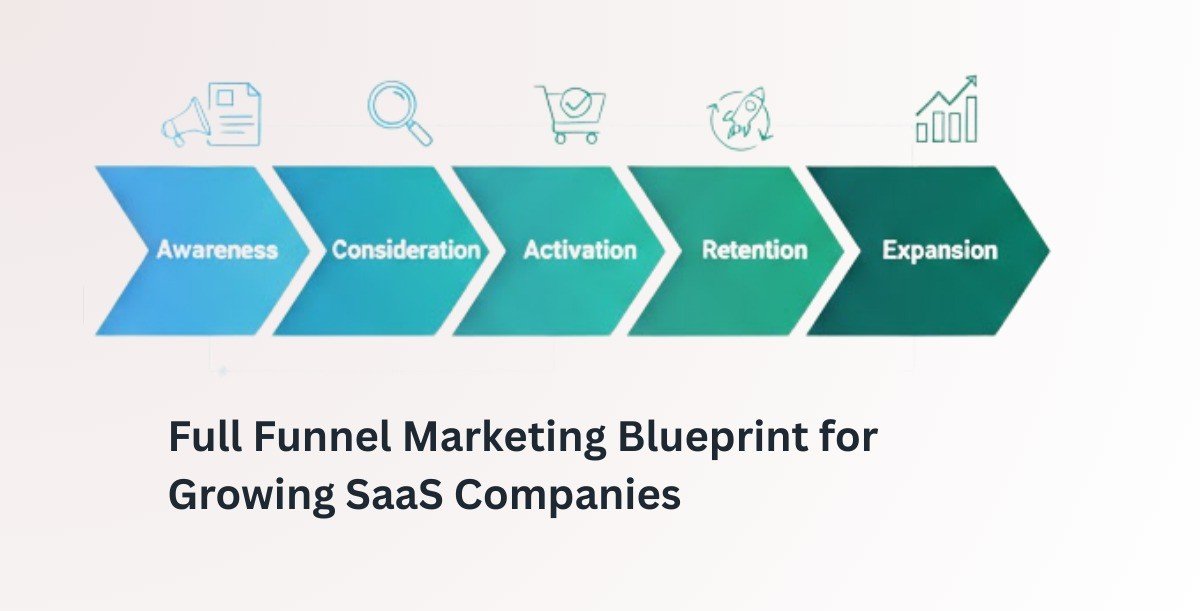
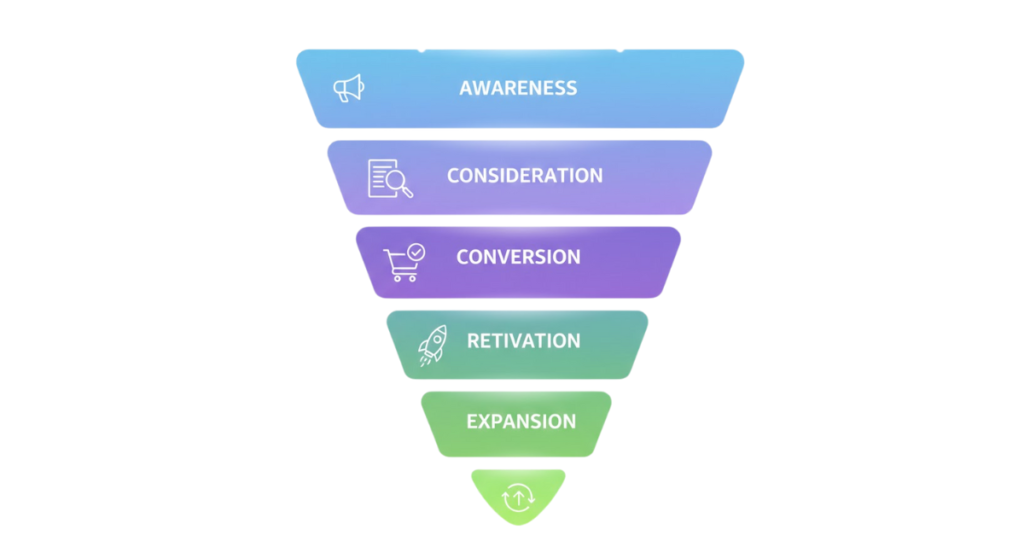
For SaaS, this funnel typically includes:
- Awareness
- Consideration
- Conversion
- Activation
- Retention
- Expansion & Advocacy
Unlike ecommerce, SaaS buyers rarely convert instantly. Decisions involve research, demos, internal approvals, and long evaluation cycles. That’s why SaaS marketing must be system-driven, not campaign-driven
Stage 1: Awareness – Attract the Right Market, Not Just Traffic
The goal at this stage is visibility with relevance.
What works best for SaaS:
- SEO content around problem awareness
- Founder-led LinkedIn content
- Paid search for high-intent problem keywords
- Industry reports and thought leadership
- PR and community participation
Expert insight:
Most SaaS companies fail here by targeting overly broad keywords. High-quality awareness traffic starts with pain-point clarity, not feature promotion.
Stage 2: Consideration – Educate Before You Sell
This is where SaaS companies either build trust or lose it.
Your prospects are comparing tools, reading reviews, and asking, “Is this right for us?”
High-performing consideration assets:
- Comparison pages (vs competitors)
- Use-case landing pages
- Webinars and product walkthroughs
- Case studies and testimonials
- Email nurture sequences
Expert tip:
Avoid aggressive sales language here. SaaS buyers respond better to clarity and proof, not pressure.
Stage 3: Conversion – Turn Interest Into Revenue
Conversion doesn’t always mean “buy now.”
In SaaS, it could be:
- Booking a demo
- Starting a free trial
- Requesting pricing
- Signing up for a pilot
What improves conversion rates:
- Simple pricing pages
- Clear value propositions
- Social proof near CTAs
- Conversion-focused landing pages
- Sales-assisted onboarding
Expert observation:
Small UX changes – CTA clarity, form length, and trust signals – often outperform more ad spend.
Stage 4: Activation – Deliver Value Fast
Activation is the most overlooked stage in SaaS marketing – yet it’s where churn is decided.
Activation answers one question:
“Did the user experience real value quickly?”
Activation strategies:
- Product-led onboarding
- In-app tutorials and checklists
- Welcome email sequences
- Guided setup flows
- Early success milestones
Expert insight:
If users don’t experience value within the first 7–14 days, retention drops sharply regardless of how good your acquisition funnel is.

Stage 5: Retention – Growth Comes From Staying Power
Retention is where SaaS businesses win long-term.
It’s far cheaper to retain a customer than acquire a new one, and retained users become your best marketing channel.
Retention drivers:
- Product updates communicated clearly
- Customer success outreach
- Educational content and webinars
- Usage-based email nudges
- Support responsiveness
Expert view:
Retention is not just a product metric – it’s a marketing responsibility. Messaging continues long after signup.
Stage 6: Expansion & Advocacy – The Compounding Layer
The strongest SaaS companies grow from within.
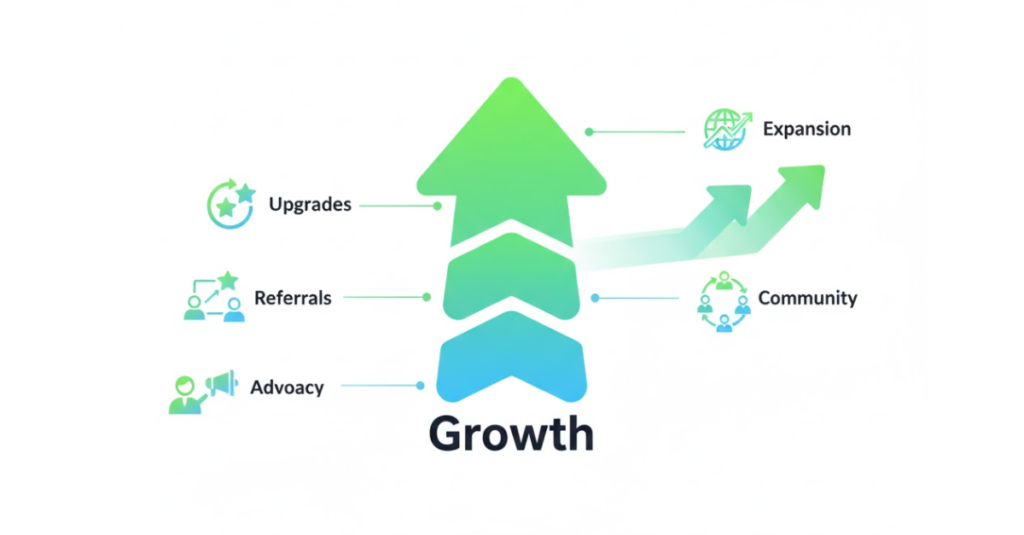
Expansion happens through:
- Plan upgrades
- Feature add-ons
- Team expansion
- Cross-sell and upsell
Advocacy happens when users:
- Leave reviews
- Refer others
- Share case studies
- Promote you organically
How to encourage this:
- Customer advocacy programs
- Review request automation
- Referral incentives
- Spotlighting customers publicly
Expert takeaway:
Your best marketers are already your customers – if you give them a reason to speak.
Aligning Sales, Marketing, and Product
Full funnel marketing only works when teams operate as one system.
That means:
- Shared definitions of MQLs and SQLs
- Feedback loops between sales and marketing
- Product insights feeding content strategy
- Unified dashboards and KPIs
Expert perspective:
SaaS growth stalls when teams optimize for isolated metrics instead of shared outcomes.
Key Metrics to Track Across the Funnel
A full funnel requires full visibility.
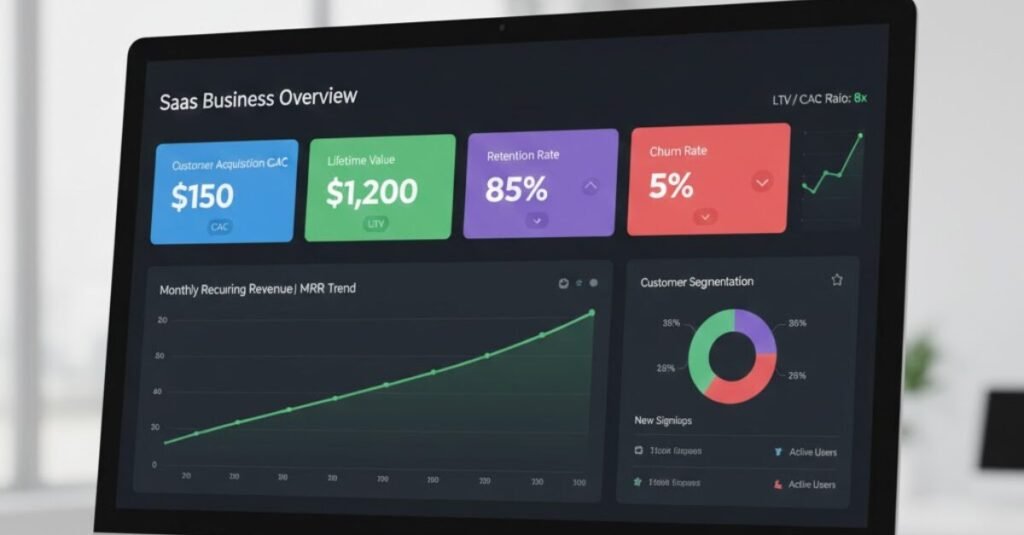
Important SaaS metrics include:
- CAC (Customer Acquisition Cost)
- LTV (Lifetime Value)
- Activation rate
- Trial-to-paid conversion
- Retention & churn rate
- Expansion revenue
Tracking only top-of-funnel metrics creates blind spots that hurt growth later.
Final Expert Takeaway
Full funnel marketing is not a tactic – it’s a growth mindset.
SaaS companies that scale sustainably:
- Invest in education, not just acquisition
- Design for long-term value, not short-term clicks
- Treat customers as partners, not transactions
The real competitive advantage isn’t more tools or more ads.
It’s a connected funnel where every stage supports the next.
When your funnel works as one system, growth becomes predictable and scalable.